
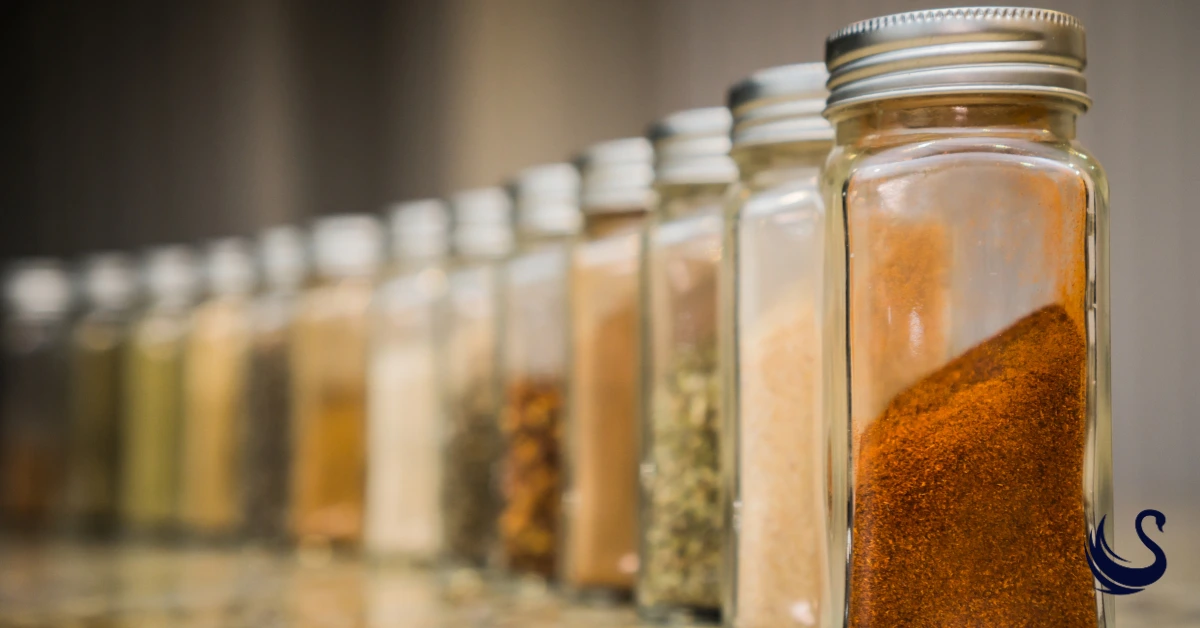
If you’ve ever bought a second jar of paprika because the first one was hiding behind the oregano, you are absolutely not alone.
Spices may be small, but they can still make a surprising mess in the kitchen.
They roll around in drawers.
They disappear into the back of cabinets.
They expire without us noticing, while we keep using the same five seasonings every week.
The good news is you do not need a big pantry or a custom kitchen to solve this. You just need a spice setup that fits the way you cook.
These spice organization ideas are practical, attractive, and easy to keep up with—even if you want them to look great on Pinterest.
Before You Organize: Do These 5 Quick Things First
A spice setup only works if it’s easy to use.
Before you buy jars, labels, racks, or drawer inserts, take a few minutes to reset what you already have.
1. Pull every spice into one place
Empty the cabinet, drawer, pantry shelf, random basket, and that one bottle hiding near the stove.
Group duplicates together.
You may find three garlic powders, two cinnamons, and a mystery seasoning blend from 2019.
2. Check freshness before you give it a fancy label
Spices do not spoil like milk, but they do lose flavor.
Here’s a simple guide:
- Ground spices: usually best within 1 to 3 years
- Dried herbs: usually best within 1 to 3 years
- Whole spices: usually best within 3 to 4 years
- Homemade blends: best within 6 months to 1 year
If a spice smells dusty, looks faded, or has no flavor when you rub some between your fingers, it’s time to toss it.
3. Decide how you want to sort them
Alphabetical is great if you have a lot of spices.
But it’s not the only way.
You can also organize by:
- Everyday cooking spices
- Baking spices
- Spicy seasonings
- Global cuisine, like Italian, Mexican, Indian, or Mediterranean
- Whole spices vs. ground spices
- Blends vs. single spices
Pick the system that makes sense to you, especially when you’re cooking on a busy night.
4. Measure before buying organizers
Measuring first saves both money and frustration.
Measure:
- Drawer depth
- Drawer width
- Cabinet shelf height
- Pantry shelf width
- Door clearance
- Jar height and lid width
Also, check if your cabinet doors can close with a rack attached inside.
This small step can make a big difference.
5. Keep heat, light, and moisture in mind
Spices last longer in cool, dark, dry spots.
A rack next to the stove might look nice, but heat and steam can make spices lose their flavor more quickly.
If you love keeping spices near the cooking zone, choose the ones you use quickly and store backups somewhere cooler.
The Best Spice Organization Ideas for a Pretty, Functional Kitchen
Whether you have one tiny drawer or a full walk-in pantry, there’s a spice storage idea here that can work for you.
Choose the idea that makes cooking easier for you, not just the one that looks perfect in someone else’s kitchen.
1. Create a “Spice Library” Drawer
A shallow drawer with matching jars is very satisfying to use.
Use small glass jars with flat lids and lay them in neat rows so you can see every label from above.
This works beautifully for:
- Small kitchens
- Minimalist kitchens
- Anyone who hates digging through cabinets
For the cleanest look, use the same jar style and one label design across the whole drawer.
2. Use Angled Drawer Trays for Easy Reading
If your drawer is deep enough, angled spice trays are a game-changer.
The jars sit slightly tilted, so the labels face you when you open the drawer.
It’s like having a small seasoning display, but tucked out of sight.
This is especially helpful if you want a tidy countertop with nothing sitting out.
3. Try Clear Drawer Channels for a Custom Look
Acrylic drawer dividers are perfect if you want something flexible.
You can create lanes for round jars, square jars, seasoning packets, or small tins.
Clear dividers help the drawer look neat and uncluttered.
Here’s a tip: leave one slot empty for new spices so your drawer stays organized when you add something new.
4. Go for Square Jars to Save Space
Round spice bottles are classic, but square jars are easier to line up tightly.
They give your pantry a neat, polished look.
Square jars are especially nice in drawers, pull-out shelves, or pantry bins because they waste less space between bottles.
Add simple black, white, or kraft labels depending on your kitchen style.
5. Label Both the Lid and the Side
This small detail can make a big difference.
If your spices live in a drawer, label the tops.
If they live on a shelf, label the fronts.
If you’re not totally sure where they’ll end up in the long term, do both.
That way, your jars stay useful even if you move them later.
6. Turn a Cabinet Shelf Into a Mini Stadium
A tiered riser lets you see the back row without having to pull everything out.
It’s one of the easiest upgrades for a standard upper cabinet.
The back row gets height.
The front row stays reachable.
You won’t have to knock over thyme just to find the cumin anymore.
For a softer look, choose bamboo or warm wood. For a bright modern look, choose clear acrylic.
7. Use an Expandable Shelf Riser for Odd-Sized Cabinets
Not every cabinet is built the same.
An expandable riser stretches to fit your shelf, which is helpful if you rent or have older cabinets.
Use the center for your most-used jars and the sides for spices you reach for less often.
It feels custom without needing any special installation.
8. Add a Turntable in a Deep Cabinet
Deep cabinets can swallow tiny spice jars.
A spinning turntable quickly solves that problem.
Place your most-used spices around the outer edge so you can spin and grab without digging.
This works best for cabinets where you can easily reach the full turntable.
If the cabinet is too high, use a bin instead so you can pull everything down safely.
9. Use a Double-Decker Spinner for Extra Storage
If you have a tall cabinet shelf, a two-level turntable gives you more vertical storage.
Put shorter jars on the top tier and taller bottles on the bottom tier.
This is great for mixed items like:
- Spice jars
- Salt grinders
- Pepper mills
- Seasoning blends
- Small oil bottles
Don’t overload it, or spinning will become more frustrating than helpful.
10. Mount Slim Racks Inside a Cabinet Door
The inside of a cabinet door is a great spot for storage.
Slim racks can hold small spice jars without taking up shelf space.
This works best when your cabinet already has enough depth for the door to close.
Use matching jars to keep the door from looking cluttered, or organize by meal type if you prefer function over symmetry.
11. Create a Pantry Door Seasoning Wall
If you have a pantry door, use it.
Over-the-door racks or mounted narrow shelves can turn the back of the door into a full seasoning zone.
This is perfect if you have a big spice collection.
Group jars in rows like:
- Baking
- Savory basics
- Heat and chili powders
- Herbs
- Blends and rubs
This keeps things organized without taking up your pantry shelves.
12. Use Narrow Pantry Bins for Spice Families
If your pantry has deep shelves, small bottles can get lost fast.
Narrow bins keep categories together.
Try bins labeled:
- Taco night
- Baking
- Curry and warm spices
- Italian herbs
- BBQ and grilling
- Extras and refills
When you’re cooking, pull out the whole bin instead of grabbing one jar at a time.
13. Make a Refill Basket for Backstock
Many attractive spice setups forget this step.
If you decant spices into matching jars, you may still have leftover bags or partial containers.
Do not let them float around the pantry.
Create one “refill basket” for extras.
Label the basket and check it before buying more. This keeps your main spice area tidy and prevents pantry clutter.
14. Use a Pull-Out Cabinet Organizer
A narrow pull-out shelf is great for spices because you can see both sides at the same time.
If you have a skinny cabinet near your prep area, this is a smart upgrade.
You can use it for:
- Everyday spices
- Cooking oils
- Vinegars
- Salt and pepper
- Seasoning packets
Just be mindful of the heat if it’s right beside the stove.
15. Add Stick-On Mini Shelves for Renters
If you can’t drill, that’s not a problem.
Adhesive mini shelves can hold lightweight spice jars on the inside of a cabinet door or pantry wall.
They’re best for small collections and lightweight containers.
Before installing, clean the surface well and let the adhesive set according to the product directions.
This simple step helps the shelves stay in place.
16. Use Magnetic Tins on the Fridge Side
The side of the fridge can be a nice spot for a spice display if it’s visible.
Magnetic tins work well for small amounts of frequently used spices.
Use them for things like:
- Chili flakes
- Everything bagel seasoning
- Cinnamon sugar
- Italian seasoning
- Taco blend
Choose tins with clear lids so you can quickly see what’s inside.
17. Try a Magnetic Strip Under a Cabinet
A magnetic strip under an upper cabinet can hold small metal spice tins while keeping the countertop clear.
This setup looks clever and modern, especially in a small kitchen.
This idea works best for lightweight tins with strong magnets.
Test one or two before committing your whole spice collection.
18. Install Skinny Wall Ledges
Narrow wall ledges are a beautiful way to display spices.
They work especially well on a blank kitchen wall, a pantry nook, or the side of a cabinet.
For the prettiest look, keep the jars consistent and avoid overcrowding the shelves.
Leaving some space between jars makes the display look organized instead of crowded.
19. Use Brass or Black Rails for a Boutique Feel
If you love a curated kitchen look, spice shelves with a front rail are gorgeous.
The rail keeps jars from falling while adding a decorative detail.
Brass feels warm and classic.
Matte black feels modern and clean.
This is a great choice if you want your spices to be part of your kitchen decor.
20. Make a Tiny Countertop Spice Station
If you cook constantly, keeping a few spices on the counter can be practical.
The key is to keep it simple.
Use a small tray and limit it to your daily favorites:
- Salt
- Pepper
- Garlic powder
- Onion powder
- Chili flakes
- Your go-to seasoning blend
A tray helps your spices look organized instead of scattered.
21. Use a Corner Ladder Rack
A small ladder-style rack can fit in an unused corner of the countertop.
It gives you vertical storage without taking over your prep space.
This works especially well for cozy kitchens, farmhouse kitchens, or cottage-style spaces.
Only keep your nicest and most-used jars on the rack.
The rest can stay tucked away.
22. Repurpose a Small Wooden Crate
A shallow wooden crate can become a rustic spice caddy.
Stand jars upright inside it, add labels on the lids, and slide it into a cabinet or leave it on an open shelf.
It’s affordable and easy to move when you need to clean the counter.
You can stain it, paint it, or leave it natural.
23. Turn a Vintage Drawer Into a Spice Tray
An old, small drawer can become a charming spice holder.
Add felt pads underneath so it does not scratch your counter or shelf.
This idea is perfect if you like thrifted pieces and want your kitchen to feel collected rather than overly matched.
It gives your kitchen personality without costing a lot.
24. Use Clear Stackable Bins for Small Pantry Shelves
Clear bins are great if you want to organize without pouring spices into new jars.
Keep original spice bottles inside and sort them by category.
Because the bins are transparent, you can still see what you have.
This is a great option if you are not ready to buy matching jars.
It’s nice if things look good, but being able to use them easily is more important.
25. Create a Baking Spice Drawer
Baking spices deserve their own little home if you use them often.
Keep cinnamon, nutmeg, cloves, ginger, cardamom, sprinkles, extracts, and baking powder near your mixing bowls or baking supplies.
This prevents your savory spices from mixing with your sweet ingredients.
It also makes baking on the weekend much easier.
26. Build a “Dinner Favorites” Bin
If you rotate through the same weeknight recipes, create a dinner favorites bin.
Include the seasonings you reach for most.
For example:
- Garlic powder
- Smoked paprika
- Cumin
- Italian seasoning
- Chili powder
- Lemon pepper
- Red pepper flakes
When you start cooking, pull out one bin, and you’re ready.
This setup isn’t just attractive—it really does save time.
27. Store Spice Packets in a Mini File System
Taco seasoning, ranch mix, gravy packets, and seasoning envelopes can become a messy pile.
Use a small file organizer, recipe box, or divided bin.
Stand packets upright like little folders.
Label sections by type so you can flip through them quickly.
This keeps packets from slipping under jars or being forgotten.
28. Add Dates to the Bottom of Jars
When you refill a jar, write the month and year on the bottom with a small removable label.
This keeps the front label neat and still helps you track freshness.
You do not have to obsess over dates.
Just use them as a guide when something starts smelling flat.
29. Use Color-Coded Labels Without Making It Look Busy
Color coding can be beautiful if you keep it subtle.
Try tiny colored dots or thin label borders.
Example categories:
- Green for herbs
- Red for spicy blends
- Brown for warm baking spices
- Blue for salts and specialty seasonings
- Yellow for everyday basics
This helps you organize without making your jars look like school supplies.
30. Make a DIY Spice Riser From Scrap Wood
If you like simple DIY projects, build a small riser using scrap wood.
You only need a few boards to create two or three levels for a cabinet shelf.
Paint it white for a clean look, stain it for warmth, or wrap the front edge with peel-and-stick wood veneer.
It’s an inexpensive way to give your cabinet a custom feel.
31. Keep a Tiny Spice Inventory List
It might not sound exciting, but it’s very helpful.
Tape a small inventory card inside the cabinet door or keep a note on your phone.
List the spices you use most and add a check mark when one is running low.
This helps you avoid buying duplicates and makes grocery shopping easier.
For an extra neat system, keep your refill basket nearby and check it before shopping.
Little Details That Make Your Spice Setup Look Expensive
You do not need luxury organizers to get a high-end look.
A few small choices can make your whole setup look polished.
Match one thing, not everything
If buying all new jars feels wasteful or expensive, match just one element.
For example:
- Use the same label style on different jars.
- Use the same lid color.
- Keep everything in matching bins.
- Choose one color palette for the area.
Consistency helps even mismatched containers look organized.
Leave breathing room
A spice shelf that’s packed full is harder to use and keep looking nice.
If you can, leave a little space between categories.
You’ll be glad you left space when you bring home a new seasoning.
Put the most-used spices in the easiest spot
The prettiest jar should not get the best location if you never use it.
Keep daily spices at eye level, in the front row, or in the easiest drawer.
Specialty spices can go higher, lower, or farther back.
Choose labels you can actually read
Tiny script labels may look beautiful, but they can be annoying when you’re cooking quickly.
Choose labels with enough contrast and clear lettering.
If you love the handwritten look, use it on larger labels so you do not have to squint.
Keep a small funnel nearby
If you decant spices into jars, a mini funnel prevents mess.
Store it with your refill basket or in the same drawer as your spices.
It’s a small tool that makes your spice system much easier to keep up.
My Favorite Spice Setup for Most Homes
If you want a simple setup that works for almost everyone, here’s what I’d do:
- Every day, spices are in a drawer near the prep area.
- Baking spices in a separate bin or drawer
- Backstock and refill bags in a labeled pantry basket
- Packets in a small, divided box
- A small inventory list on your phone
This gives you beauty, function, and flexibility.
You can still make it aesthetic with matching jars, bamboo lids, clear bins, or pretty labels.
But the best part is you’ll always be able to find what you need.
A Quick Final Note
Your spice organization doesn’t have to be perfect to be useful.
Start with the spot that annoys you most.
Maybe that’s one messy drawer.
Maybe it’s a cabinet where everything falls over.
Maybe it’s a pantry shelf full of duplicates.
Pick one idea, make it easier, and build from there.
Your kitchen should make cooking easier, not feel like you’re solving a puzzle with spice jars every night.
Save this to your Pinterest Organization Board so you can find it later!